MailSpector – Email Protection & Phishing Detection Tool
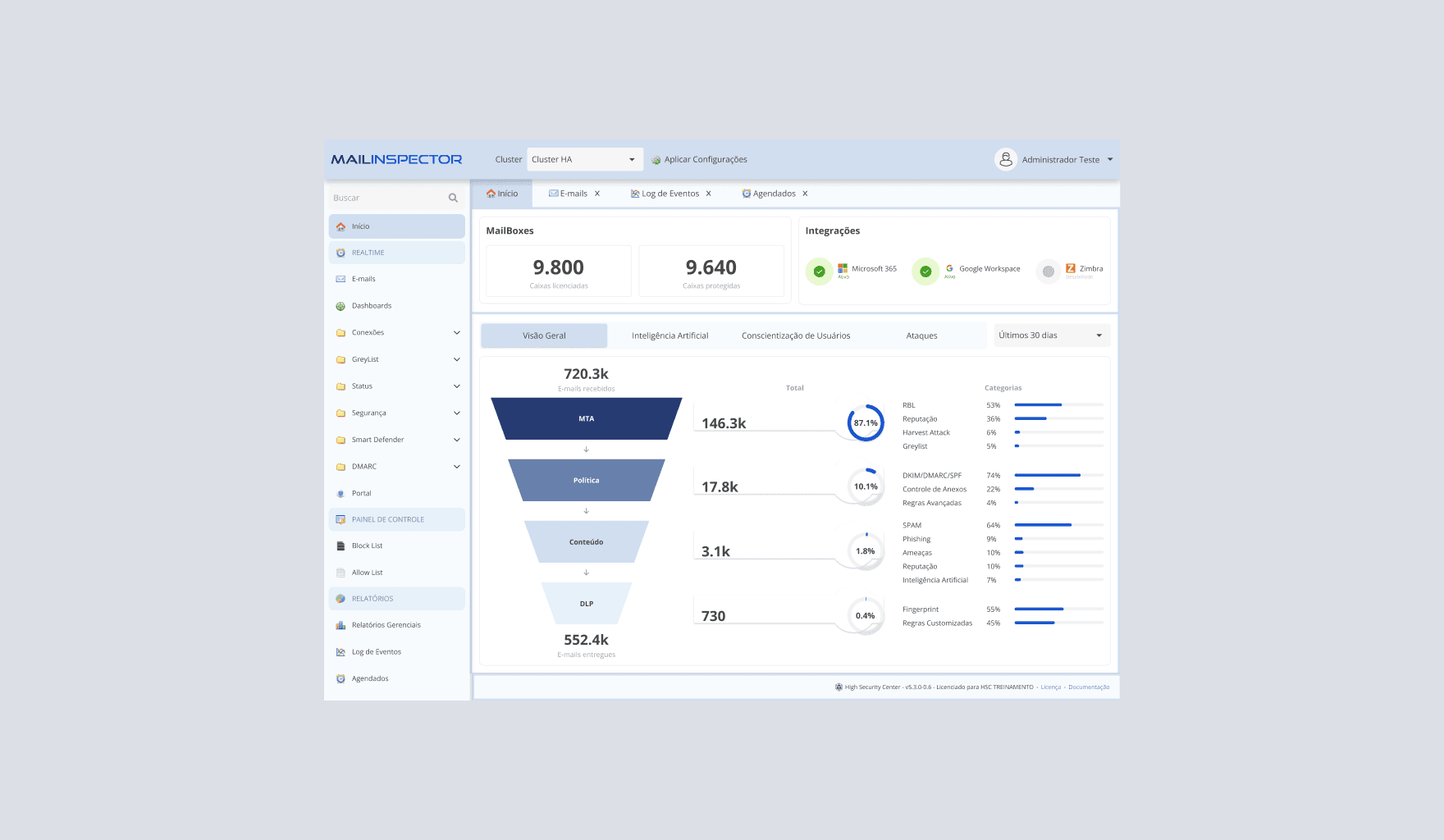
Project Overview & Role
I worked on MailSpector, HSC’s email protection tool designed to identify phishing attempts, alert users in real time, and reduce the risk of social-engineering attacks across corporate environments.
Unlike some of the other products I contributed to, MailSpector was not a platform I helped create from the ground up. Instead, my role involved improving the existing experience — enhancing usability, refining flows, and developing new features that strengthened protection and helped users better understand the risks present in their inboxes.
Research & Warning System Improvements
My initial focus was understanding how employees interacted with MailSpector on a daily basis. I reviewed user feedback, analyzed behavioral patterns, and spoke with security teams to learn where users still felt uncertain or confused when dealing with potential phishing emails.
Based on these insights, I improved UX elements that guided users through risk identification, such as reorganizing warning messages, refining alert hierarchies, and making suspicious-email indicators more visually clear. I also worked on simplifying how users could report phishing attempts directly from their inbox, reducing the time and friction involved in escalating suspicious content to the security team.
Front-End Refinement & Threat Categorization
On the development side, I contributed to front-end updates and implemented new features that made the protection workflow more intuitive and actionable. This included enhancing the risk-analysis screen, improving the categorization and explanation of threats, and introducing micro-interactions that clarified why an email was flagged.
I also worked on optimizing performance and ensuring UI consistency across different email providers and platforms. These improvements reduced confusion, increased user confidence, and made the detection process more transparent — especially for non-technical employees who relied on MailSpector as their first line of defense against phishing.
My contribution to MailSpector helped refine a critical security tool already in use by companies seeking to reduce human vulnerability. By enhancing the user experience, clarifying alerts, and developing new features, I contributed to making phishing detection more accessible and effective for employees at all technical levels.